
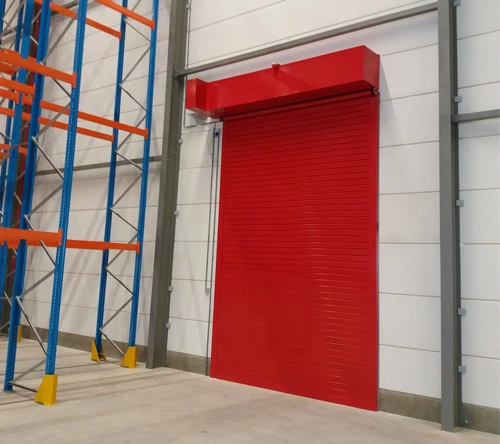
- Fail-safe gravity descent, no power needed
- Fire panel integration and drop testing
A fire-rated roller shutter door is a certified assembly, not simply a heavy door. It exists to hold a compartment line for a stated period, and it only does that if the curtain, the guides, the barrel, the fixings and the release mechanism are all part of the tested specification, with the documentation to prove it.
Fire-rated roller shutter doors we supply into Zimbabwe
- Rated curtain assemblies supplied to their tested specification with full documentation.
- Certified guides and fixings, because the rating covers the assembly rather than the curtain alone.
- Controlled descent so the door closes at a safe rate instead of dropping.
- Fusible link or detector release, interfaced to the fire panel where the design requires it.
- Insulated variants where the specification calls for integrity and insulation.
Certification that travels with the door
On a cross-border supply the paperwork matters as much as the steel. A rated door arriving in Zimbabwe without its test documentation and installation record is a heavy door with a claim attached, and no insurer or inspector will accept it. We supply the certification with the consignment and the commissioning record on completion.
Where fire shutters are needed
Mining and processing operations where compartment lines cross openings and the fire load is significant. Manufacturing and warehousing in the Harare and Bulawayo industrial areas. Bonded and transit warehousing at the border posts. Plant, generator and switch rooms. Hotels and lodges with public assembly areas.
A release that will work after years of nothing
The mechanism has to move once, correctly, after years of doing nothing, in dust and heat. That is a demanding ask, and it is why a fire shutter is the one door type we will not supply without a maintenance arrangement of some kind. An untested rated door on a Zimbabwean site is very often a door that will not drop.
Testing between our visits
We test and record the release, the descent rate and the full drop at every scheduled visit. Between visits we train the site’s own people to carry out and log the routine checks, and we provide the record sheets, so the door has a documented history rather than a gap.
Ratings and what they mean
A rating is a period of integrity under test conditions, commonly sixty or one hundred and twenty minutes, and it is a property of the tested assembly. Fitting a rated curtain into non-rated guides, or anchoring it into an unsuitable substrate, voids the rating regardless of what the curtain is made of.
Retrofitting into older buildings
A rated door has to be anchored into rated construction. In older industrial stock the wall around an opening is frequently not what the drawing says, and we check what is actually there at survey before anything is manufactured.
What a fire-rated roller shutter door costs
More than a standard door, because the rating is in the whole assembly and in the certification. We quote the door, the release interface, the commissioning and the cross-border logistics separately.
Related
Also worth a look
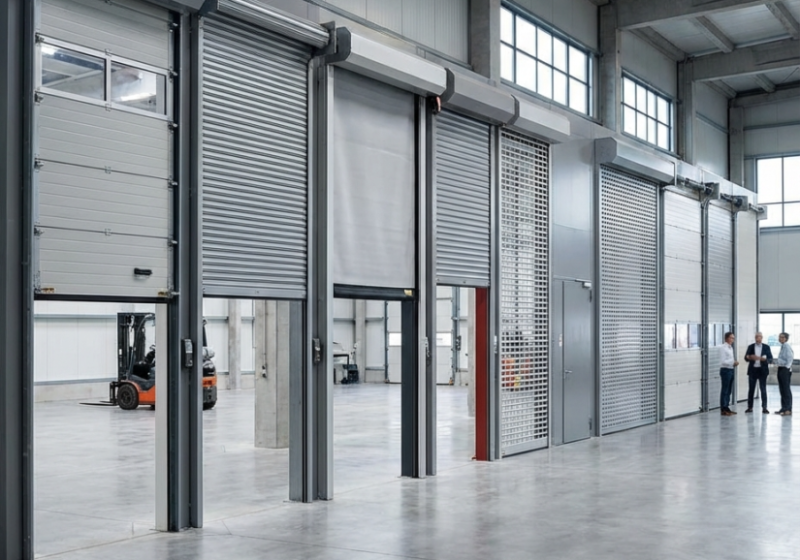
Galvanised Roller Shutter Doors
Repairable by a local workshop
Hot-dip galvanised roller shutter doors that resist rust in coastal and washdown environments. Manufactured to your opening at our Zimbabwe works.
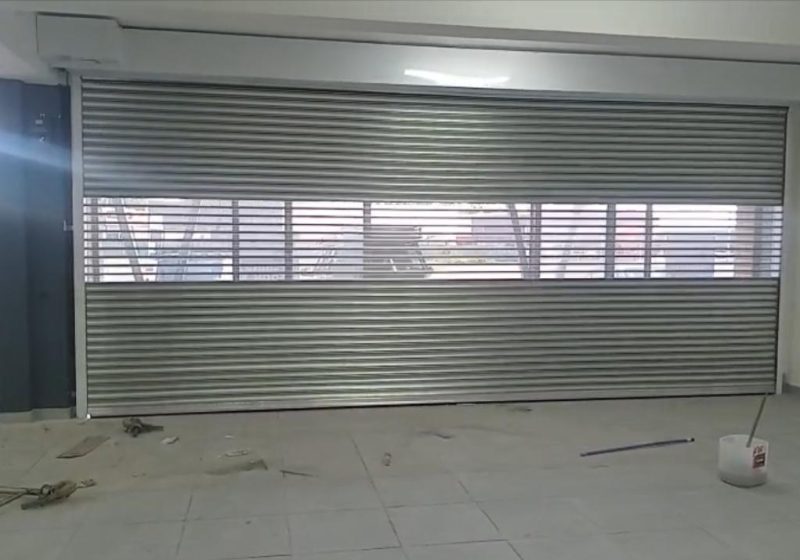
Residential Roller Shutter Doors
Closes and locks without power
Garage doors for homes in both cities, built to the measured opening and fitted with a manual release that actually works when the power is off.
- Insulated aluminium, quiet running
- Battery backup for load shedding
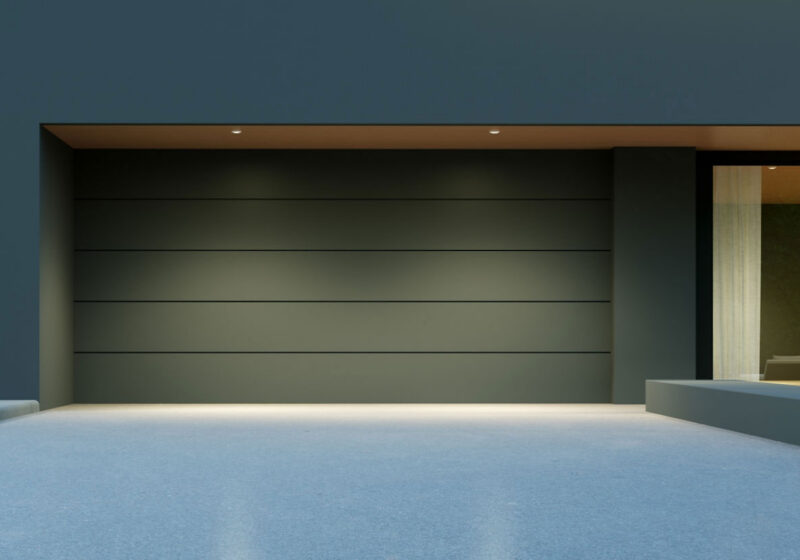
Steel Garage Doors
Strong, and repairable on site
Galvanised steel garage doors in 0.5mm to 0.8mm sheet, Chromadek or powder-coated, built to your measured opening as roll-up, sectional or tip-up. Repairs on any make.
- 0.5mm to 0.8mm galvanised sheet
- Chromadek or powder-coated to any RAL
- Roll-up, sectional or tip-up